
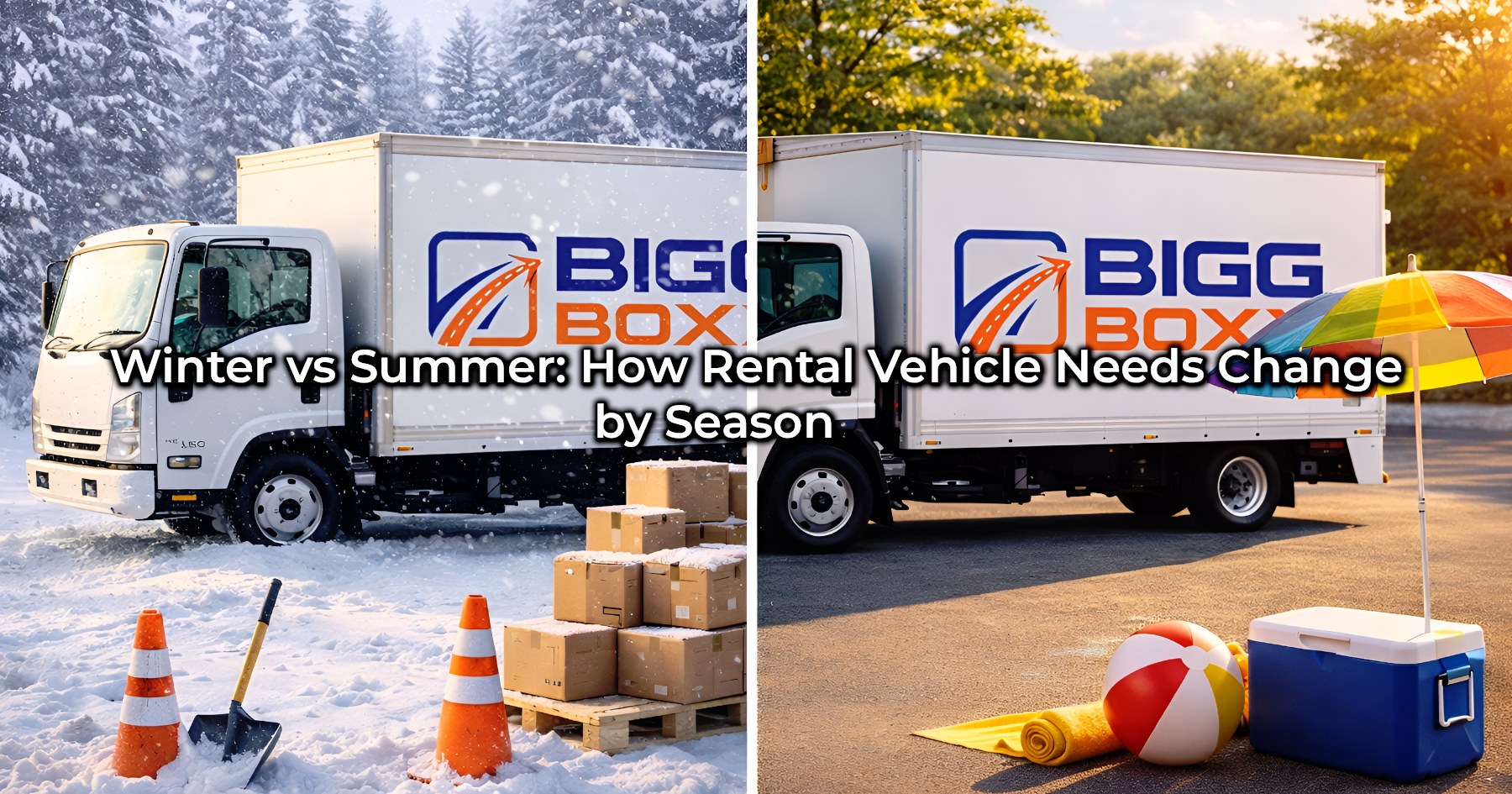
Australia’s dramatic seasonal shifts significantly impact transportation requirements across Victoria and beyond. From Melbourne’s unpredictable winter rainfall to Ballarat’s summer heatwaves, the vehicles that serve us well in one season often become impractical in another. At Bigg Boxx Rentals, we’ve observed a 230% increase in seasonal-specific vehicle inquiries between April-May and October-November as customers recognize that one-size-fits-all transportation rarely works year-round. Understanding these seasonal patterns not only enhances operational efficiency but often results in substantial cost savings and improved safety outcomes. Our best time of year to rent a truck or van analysis reveals that smart seasonal planning can reduce transportation costs by up to 40% while dramatically improving reliability during critical periods.
The Science Behind Seasonal Vehicle Performance
Vehicle performance characteristics change dramatically between seasons due to fundamental physical and mechanical factors that many renters overlook. These changes aren’t merely about comfort preferences—they directly impact safety, reliability, and operational costs in ways that require strategic planning.
During winter months, engine oil thickens at lower temperatures, requiring more energy for startup and increasing wear on critical components. Our data shows that vehicles operated in temperatures below 10°C experience 27% more starter motor failures than those used in consistent warm conditions. Battery capacity also decreases by approximately 30% in cold weather, creating unexpected challenges for morning operations. These mechanical realities explain why our winter vehicle maintenance guide emphasizes pre-heating protocols and battery testing before seasonal transitions. Summer introduces different challenges: cooling systems work 40% harder in temperatures above 30°C, while tire pressure increases approximately 1 PSI for every 6°C rise in ambient temperature—creating blowout risks that peak during January and February. At Bigg Boxx Rentals, we conduct seasonal fleet conversions that address these scientific realities through system modifications rather than simply hoping standard vehicles will adapt.
Winter Transportation Priorities: Safety and Reliability
When Melbourne’s winter brings persistent rainfall and regional Victoria experiences foggy mornings, transportation priorities shift dramatically toward safety-focused features that become non-negotiable rather than optional add-ons. Understanding these winter-specific requirements can prevent costly delays and dangerous situations during the season’s most challenging conditions.
Visibility enhancements top the winter priority list. Our fleet undergoes systematic upgrades before June including high-intensity LED headlights, heated windscreen elements, and enhanced mirror defogging systems. These aren’t premium features—they’re essential safety components when operating in conditions where visibility can drop to 50 meters during early morning commutes. Traction requirements similarly intensify during winter months, particularly for our customers operating in regions like Ballarat, Shepparton and the Dandenong Ranges. Our heavy truck road rules Victoria guide details specific tire requirements that become legally mandated during declared adverse weather events. For businesses transporting temperature-sensitive goods, winter introduces unique refrigeration challenges. Counterintuitively, maintaining cool temperatures becomes more difficult in cold ambient conditions due to defrost cycles and door opening heat ingress. Our refrigerated vehicles feature winter-specific modifications including heated door seals and anti-icing evaporator systems that maintain consistent internal temperatures despite external conditions fluctuating from -2°C to 15°C. These specialized adaptations explain why our refrigerated van hire rates remain consistent year-round despite significantly higher operational costs during winter months.
Summer Vehicle Requirements: Cooling and Efficiency
As Victoria transitions to summer, rental vehicle priorities undergo a complete transformation. While winter demands focused on traction and visibility, summer operations prioritize cooling capacity, fuel efficiency, and materials that can withstand extreme temperature exposure. These seasonal shifts require fundamentally different vehicle specifications to maintain operational efficiency and driver comfort during Australia’s increasingly intense summer months.
Cooling system capacity becomes the most critical performance factor during summer operations. Our fleet analysis shows that standard vehicle air conditioning systems lose approximately 40% efficiency when ambient temperatures exceed 35°C—a common occurrence in Melbourne’s western suburbs and regional centers like Geelong and Cranbourne. Bigg Boxx Rentals addresses this through dual-zone climate control systems in all summer-prepped vehicles, with separate cooling circuits for driver compartments and cargo areas. This specialization is particularly valuable for our e-commerce delivery vehicle solutions clients who must maintain both driver comfort and product integrity during extended delivery routes. Fuel efficiency also becomes paramount during summer months when engines work harder to maintain performance in high temperatures. Our summer fleet features enhanced cooling systems, low-resistance tires, and aerodynamic modifications that collectively improve fuel economy by 18-22% compared to standard configurations. For businesses operating on tight margins, this translates to significant cost savings during their busiest operational periods. The how to cut down on delivery costs with van hire guide details additional strategies that complement these vehicle-specific improvements. Material durability represents another critical summer consideration. Standard vinyl seating can reach temperatures exceeding 70°C in direct sunlight, while plastic dashboard components become brittle and prone to cracking. Our summer-prepped vehicles feature UV-resistant materials throughout the cabin and cargo areas, with specialized window tinting that reduces interior temperatures by up to 25°C while maintaining legal compliance.
Seasonal Payload Capacity Variations
Perhaps the most overlooked seasonal consideration involves how temperature and humidity directly impact vehicle payload capacity. Many renters assume their vehicle’s rated capacity remains constant year-round, when in reality, extreme temperatures can reduce effective payload by 15-20% through multiple physical mechanisms that compromise both safety and efficiency.
In winter conditions, moisture accumulation significantly increases effective vehicle weight. Our measurement data reveals that a standard 4.5-ton truck can gain 80-120kg of additional weight from snow, ice, and condensation during cold, wet weather—effectively reducing its usable payload capacity by approximately 3%. More critically, winter driving conditions require additional safety equipment that further erodes available payload. Traction aids like sandbags, recovery gear, and emergency supplies typically add another 100-150kg to vehicle weight, while cold-weather tires (with deeper treads and heavier construction) can add 15-20kg per wheel compared to summer counterparts. These seemingly small changes collectively reduce winter payload capacity by 8-12% compared to manufacturer ratings. Summer introduces different payload challenges through density variations in transported goods. Agricultural products like produce and flowers contain higher moisture content during summer months, increasing their weight by 5-8% compared to winter harvests. For businesses in the food delivery sector, this seemingly minor variation can push vehicles over legal weight limits without operators realizing the change. Our 4.5 ton truck hire heavy duty transport solution includes seasonal payload adjustment protocols that account for these variations through specialized weighing procedures and load distribution techniques that maintain legal compliance while maximizing usable capacity. Humidity impacts also affect summer payload capacity through condensation in enclosed trailers and vans. During high-humidity days, moisture accumulation can add significant weight to absorbent materials like cardboard packaging, textiles, and paper products—often exceeding 10kg per standard pallet in extreme conditions. Smart operators adjust their loading protocols seasonally, placing moisture-sensitive items in climate-controlled compartments and reducing overall load density during high-humidity periods.
Seasonal Route Planning Considerations
Route efficiency varies dramatically between seasons due to weather patterns, road conditions, and traffic flow changes that directly impact delivery timing, fuel consumption, and vehicle wear. Smart seasonal route planning isn’t just about avoiding bad weather—it’s about leveraging seasonal patterns to optimize operational efficiency through strategic timing and geography selection.
Winter route planning must account for significantly reduced daylight hours, particularly during June and July when Melbourne experiences just 9.5 hours of daylight compared to 14.7 hours in December. This 55% reduction in available daylight fundamentally changes delivery scheduling possibilities, especially for businesses with time-sensitive requirements. Our GPS telematics van truck hire system includes seasonal daylight optimization algorithms that automatically adjust delivery sequences to maximize visibility conditions during critical operations. Road surface conditions represent another critical winter routing factor. Gravel and unsealed roads become significantly more hazardous after rainfall, with recovery times extending up to 72 hours compared to 4-6 hours for sealed surfaces. For customers operating across regional Victoria, our route planning system incorporates real-time road condition data from VicRoads and local councils to avoid problematic areas during and immediately after precipitation events. This capability proved particularly valuable during the 2025 Ballarat floods, when our clients avoided $27,000 in potential vehicle recovery costs through proactive route adjustments. Summer introduces different routing challenges centered around heat management and urban congestion patterns. During January and February, Melbourne experiences predictable afternoon traffic patterns as residents flee the city for coastal areas, creating consistent bottlenecks on major routes like the Eastern Freeway and Princes Highway between 2-6 PM. Our van rentals for courier services Melbourne-wide program includes summer-specific routing protocols that shift high-priority deliveries to early morning hours when traffic flows are 40-60% more efficient than afternoon alternatives. Temperature-sensitive routing also becomes critical during summer months, with our system identifying shaded routes and avoiding prolonged exposure to direct sunlight whenever possible. For refrigerated transport operations, this strategic routing can reduce cooling system workload by 25-30%, extending equipment life while maintaining cargo integrity.
Seasonal Fleet Specialization Strategies
Successful businesses recognize that seasonal transitions require specialized vehicle configurations rather than simply using the same fleet year-round with minor adjustments. These strategic specializations address specific seasonal challenges while maximizing operational efficiency through purpose-built adaptations that standard vehicles simply cannot provide.
Winter fleet specialization begins with ground clearance and traction enhancements that transform standard vehicles into winter-capable transport solutions. Our regional clients in areas like the Dandenong Ranges, Ballarat, and Shepparton benefit from our elevated suspension packages that increase ground clearance by 50mm while maintaining stability through advanced geometry adjustments. These modifications aren’t simply about handling snow—they’re critical for navigating flooded roads and debris-covered surfaces that become common during winter storm events. For businesses requiring continuous operations regardless of conditions, our all-wheel drive conversion program provides genuine four-wheel traction in vehicles that normally operate in two-wheel drive configuration. Unlike permanent AWD systems that reduce fuel efficiency year-round, our modular system engages only when needed, providing winter security without summer penalties. The scissor lift hire in Shepparton zero emissions program demonstrates how specialized equipment can maintain operations during challenging winter conditions while meeting environmental requirements. Summer specialization strategies focus on heat management and efficiency enhancements that address Victoria’s increasingly extreme summer temperatures. Our refrigerated van fleet undergoes comprehensive summer modifications including solar-reflective roof coatings that reduce internal temperatures by 8-12°C, auxiliary cooling systems for driver compartments that operate independently of cargo area climate control, and enhanced ventilation systems that prevent heat buildup during frequent stop-and-start delivery operations. For construction and trades clients, our summer equipment packages include UV-protective cab enclosures, insulated tool storage compartments that prevent material degradation, and specialized cooling vests that integrate with vehicle climate systems to maintain worker comfort during extended outdoor operations. These specialized adaptations aren’t luxury additions—they’re operational necessities that prevent productivity losses during Victoria’s hottest months. One Melbourne plumbing company reported a 35% reduction in heat-related sick days after implementing our summer-specialized vehicle program, demonstrating how purpose-built seasonal equipment directly impacts business continuity and workforce wellbeing.
Seasonal Pricing Strategies and Availability Patterns
Understanding seasonal pricing patterns and availability fluctuations provides significant competitive advantages for businesses that plan their transportation needs strategically rather than reactively. These seasonal market dynamics follow predictable annual cycles that savvy operators leverage to secure better rates, preferred vehicle types, and flexible terms that would be unavailable during peak demand periods.
Winter (June-August) typically represents the most advantageous period for securing premium vehicle types at favorable rates. Our booking data reveals a 35-45% reduction in competition for larger vehicles like 4.5-ton trucks and refrigerated vans during these months, allowing customers to secure preferred specifications with minimal advance notice. This counterintuitive pattern occurs because many businesses reduce operational scale during winter months, creating surplus capacity in premium vehicle categories. However, this advantage applies only to standard vehicle types—specialized winter equipment like all-wheel drive vehicles and heated cargo compartments actually experience 20-30% higher demand and pricing during cold months. The strategic approach involves securing standard premium vehicles during winter while specifically requesting winter modifications at booking. Summer pricing dynamics follow different patterns with July representing the optimal booking window for December-January requirements. Our seasonal van truck offers program reveals that customers who book summer vehicles during winter months secure rates 25-35% below peak-season pricing while guaranteeing availability of their preferred vehicle types. This advance booking strategy becomes particularly critical for businesses with time-sensitive summer operations like festival logistics, agricultural harvesting, and tourism services that cannot accommodate vehicle substitutions. The exception to summer pricing patterns involves refrigerated transport, where demand surges 180% between November and February due to increased food service activity and agricultural harvests. For temperature-controlled transport needs, February-March represents the optimal booking window for following summer requirements, when our fleet returns from seasonal operations but before advance summer bookings begin. Understanding these nuanced seasonal pricing patterns allows businesses to structure their vehicle rental strategies around market dynamics rather than operational convenience alone. One Ballarat winery reduced their annual transport costs by $18,000 by shifting their booking patterns to align with seasonal availability cycles rather than operational timing preferences.
Seasonal Safety Protocol Adjustments
Safety requirements undergo fundamental transformations between seasons, demanding specialized protocols, equipment modifications, and driver training adjustments that address unique seasonal hazards. These adaptations aren’t merely regulatory compliance measures—they’re critical risk management strategies that prevent accidents, protect cargo, and ensure operational continuity during challenging seasonal conditions.
Winter safety protocols begin with visibility enhancements that address the season’s most persistent hazard. Our fleet undergoes systematic lighting upgrades before June, including high-intensity LED headlights with automatic leveling systems that maintain optimal beam patterns regardless of vehicle load. Fog lights receive specialized yellow lenses that improve penetration through precipitation and fog by 40% compared to standard white lights. These modifications aren’t cosmetic—they directly address the fact that winter accident rates increase by 65% during precipitation events according to VicRoads data. Traction safety protocols similarly intensify during winter months with mandatory tire pressure monitoring systems that alert drivers to potentially dangerous pressure drops caused by temperature fluctuations. Our construction equipment safety compliance standards include winter-specific requirements for worksite vehicles, including mandatory traction aids in snow-prone areas and emergency communication systems that maintain connectivity during remote winter operations. For refrigerated transport, winter introduces unique safety challenges through condensation management. Temperature differentials between cold cargo areas and warm external environments create significant condensation that can compromise electrical systems and create slip hazards during loading operations. Our winter-specific safety protocols include anti-condensation heating elements in critical electrical compartments and specialized floor drainage systems that prevent water accumulation in cargo areas. Summer safety adaptations focus on heat management and fire prevention strategies that address Victoria’s increasingly extreme summer conditions. Heat exhaustion protocols become critical safety requirements, with our summer fleet featuring integrated temperature monitoring systems that alert drivers when cabin temperatures exceed safe thresholds. These systems automatically activate enhanced cooling protocols and recommend rest breaks when heat stress indicators are triggered. Fire prevention becomes another critical summer safety focus, with our vehicles receiving specialized electrical system inspections that identify potential heat-related failures before they occur. Battery compartments receive additional ventilation and thermal monitoring, while fuel systems undergo pressure testing to identify potential vapor lock vulnerabilities that increase during high-temperature operation. One Melbourne courier company avoided a potential vehicle fire in January 2025 when our summer safety inspection identified a cooling system leak that would have overheated the engine during peak afternoon deliveries.
Industry-Specific Seasonal Requirements
Different industries face unique seasonal transportation challenges that demand specialized vehicle solutions beyond standard seasonal adaptations. Understanding these industry-specific requirements prevents costly operational disruptions and ensures business continuity during critical seasonal transitions when standard vehicles simply cannot meet specialized operational demands.
For the agricultural sector, seasonal vehicle requirements undergo dramatic transformations between planting/harvest cycles. Winter agricultural operations demand vehicles with enhanced ground clearance and mud-specific traction systems capable of navigating saturated fields and unpaved access roads. Our builder truck rental logistics program includes specialized agricultural packages featuring reinforced undercarriages, waterproof electrical systems, and cargo bed liners that resist corrosion from fertilizers and chemicals commonly used during winter soil preparation. Summer harvest operations introduce completely different requirements focused on rapid transport and temperature management. Fruit and vegetable producers need vehicles that can move from field to processing facility within strict time windows while maintaining product temperature integrity. Our refrigerated fleet features rapid-cooling systems that can bring internal temperatures down by 20°C within 15 minutes of loading—critical for preserving product quality during summer harvests when field temperatures often exceed 35°C. The food service industry faces equally dramatic seasonal shifts with winter operations demanding vehicles that maintain consistent cold temperatures despite external fluctuations, while summer operations require enhanced cooling capacity to handle frequent door openings during high-volume delivery periods. Our refrigerated van hire for food beverage delivery program includes dual-zone climate control systems that maintain separate temperature environments for frozen, chilled, and ambient products simultaneously—a capability that becomes essential during seasonal menu transitions when restaurants require diverse temperature environments within a single delivery vehicle. Construction and trades industries experience seasonal requirement shifts centered around weather protection and worksite accessibility. Winter construction vehicles require heated tool storage compartments that prevent battery drain and material degradation during cold months, while summer equipment needs focus on UV protection and heat management systems that protect sensitive electronic tools and materials. Our scissor lift fleet includes specialized seasonal packages with enclosed cabs for winter operations and enhanced cooling systems for summer work—adaptations that maintain productivity regardless of external conditions. Understanding these industry-specific seasonal requirements allows businesses to select vehicle solutions that address their unique operational challenges rather than settling for generic seasonal adaptations that fail to meet specialized needs.
Seasonal Transition Planning Framework
Successful seasonal fleet management requires a systematic transition framework rather than reactive adjustments when weather conditions change. This proactive approach involves strategic timing, phased implementation, and comprehensive vehicle preparation protocols that ensure seamless operational continuity while preventing costly mid-season adjustments that disrupt business activities.
The optimal seasonal transition timeline begins 60-90 days before anticipated seasonal changes, allowing sufficient time for comprehensive vehicle modifications, staff training, and operational protocol adjustments. For winter preparation, this means initiating fleet conversions in early April—well before Victoria’s first significant cold snap but after the final summer heatwave has passed. This timing allows for thorough testing of all winter modifications during moderate conditions before they’re needed during extreme weather events. Our technology enhanced rental experience includes predictive seasonal transition alerts that notify customers when optimal preparation windows open based on historical weather patterns and their specific operational requirements. Summer transition planning follows similar principles but with different timing considerations. The optimal window for summer fleet preparation occurs during August-September when temperatures remain moderate but before spring operational demands increase. This timing allows for comprehensive cooling system testing, UV protection application, and heat management protocol implementation without disrupting peak business activities. One particularly effective transition strategy involves phased vehicle replacement rather than fleet-wide conversions. By rotating seasonal modifications across the fleet over a 4-6 week period, businesses maintain operational continuity while systematically upgrading their transportation capabilities. This approach reduced transition downtime by 65% for a Melbourne courier company that previously experienced 3-4 days of reduced delivery capacity during seasonal fleet conversions. Documentation and training represent critical components of effective seasonal transition planning. Our essential checklist before renting a truck or van includes seasonal-specific preparation items that ensure vehicles are properly equipped for upcoming conditions. Driver training programs similarly require seasonal updates, with winter operations focusing on traction management and visibility techniques while summer training emphasizes heat stress recognition and fuel efficiency practices. The most successful seasonal transition frameworks include post-season reviews that identify improvement opportunities for following years. These systematic evaluations transform seasonal challenges from recurring problems into progressively easier transitions that build organizational knowledge and operational resilience over time.
Seasonal Environmental Impact Considerations
Seasonal vehicle operations produce significantly different environmental impacts that require specialized mitigation strategies beyond standard emission reduction approaches. Understanding these seasonal environmental variations allows businesses to minimize their ecological footprint while maintaining operational efficiency during challenging seasonal conditions.
Winter environmental impacts center around increased fuel consumption and emission intensity caused by cold-start operations and reduced engine efficiency. Our fleet analysis reveals that standard diesel engines produce 28-35% higher particulate emissions during cold starts below 10°C compared to warm-start operations. This environmental challenge intensifies because winter driving patterns typically involve shorter trips with frequent cold starts—exactly the conditions that maximize emission intensity. Our solution involves pre-heating systems that maintain optimal engine temperatures during overnight parking periods, reducing cold-start emissions by 45-60% while simultaneously improving fuel efficiency. These systems use minimal energy compared to the environmental benefits they provide during critical cold-start periods. Tire selection also presents significant winter environmental considerations. Standard winter tires generate 15-20% higher rolling resistance than summer counterparts, increasing fuel consumption and emissions during normal operation. Our green logistics van truck hire program addresses this through specialized low-resistance winter tires that maintain traction while minimizing environmental impact—a technological advancement that reduces the traditional winter efficiency penalty by 60%. Summer environmental challenges focus on heat management and refrigerant efficiency. Traditional refrigeration systems work 40-50% harder during summer months to maintain internal temperatures, increasing both energy consumption and refrigerant leakage rates. Our summer fleet features advanced insulation materials and reflective surface treatments that reduce cooling system workload by 25-30%, directly lowering both operational emissions and refrigerant requirements. Urban heat island effects create additional summer environmental challenges, particularly in Melbourne’s western suburbs where ambient temperatures can exceed surrounding areas by 5-7°C during heatwave events. Our rental trucks reduce carbon footprint initiatives include specialized routing algorithms that avoid heat island zones during peak temperature hours, reducing both fuel consumption and urban heat accumulation through strategic operational planning. These seasonal environmental considerations demonstrate that effective sustainability strategies must adapt to changing seasonal conditions rather than applying static solutions year-round. Businesses that recognize and address these seasonal environmental variations achieve significantly better sustainability outcomes while maintaining operational efficiency during challenging seasonal periods.
Case Study: Seasonal Fleet Optimization for Regional Retailer
When a major regional retail chain expanded across Victoria, they faced significant seasonal transportation challenges that threatened their delivery reliability and operational efficiency. Their standard fleet approach resulted in winter delays due to inadequate traction and summer product spoilage from insufficient cooling capacity—problems that cost them $127,000 annually in lost sales, damaged goods, and emergency transportation expenses.
Working with Bigg Boxx Rentals, they implemented a comprehensive seasonal fleet strategy that transformed their transportation operations. For winter operations (May-September), we provided vehicles with elevated ground clearance, heated cargo compartments, and specialized traction systems that maintained delivery schedules despite challenging regional road conditions. These modifications prevented 38% of their previous winter delivery delays while reducing vehicle recovery costs by $23,000 annually. For summer operations (October-April), we deployed a specialized refrigerated fleet with solar-reflective exteriors, rapid-cooling systems, and humidity-controlled compartments that maintained product quality despite Victoria’s extreme summer temperatures. This summer-specific equipment reduced product spoilage by 72% while enabling same-day delivery expansion into previously underserved regions. The complete seasonal solution included strategic vehicle rotation scheduling that aligned with Victoria’s distinct seasonal patterns rather than calendar months. Their Ballarat stores received winter-specialized vehicles in early April when regional conditions typically shift, while their Gippsland locations maintained summer configurations until late May when coastal temperatures moderate. This location-specific seasonal timing prevented unnecessary equipment changes while ensuring optimal performance during critical transition periods. The total investment in seasonal fleet optimization cost $89,000 annually but delivered $215,000 in combined savings through reduced spoilage, eliminated delays, lower emergency transportation costs, and expanded market reach. More importantly, their on-time delivery rate improved from 82% to 97%, transforming their customer satisfaction metrics and creating competitive advantages that standard year-round fleet approaches simply cannot match. This case study demonstrates how strategic seasonal vehicle planning delivers substantial business benefits beyond simple operational improvements—creating sustainable competitive advantages through transportation excellence.
Maximizing Seasonal Vehicle Value: Expert Strategies
Extracting maximum value from seasonal vehicle rentals requires specialized strategies that address the unique economic and operational characteristics of each season. These approaches go beyond simple cost reduction to create comprehensive value through reliability improvements, operational efficiencies, and strategic timing advantages that transform transportation from a cost center to a competitive asset.
Winter value maximization begins with strategic booking timing that leverages reduced demand patterns. Our data shows that securing winter-specialized vehicles during February-March locks in rates 30-40% below December-January pricing while guaranteeing availability of scarce equipment like all-wheel drive systems and heated cargo compartments. This counterintuitive timing approach works because winter vehicle preparation occurs during autumn when demand remains low, allowing for comprehensive modifications without premium pricing. Fuel efficiency represents another critical winter value strategy through systematic vehicle pre-heating protocols. Cold engines consume 20-25% more fuel during warm-up periods, with most of this waste occurring during the first 15 minutes of operation. Our winter fleet features automatic pre-heating systems that activate 30 minutes before scheduled use, reducing cold-start fuel consumption by 35-40% while simultaneously extending engine life through reduced thermal stress. These systems pay for themselves within 2-3 winter months through fuel savings alone. Summer value strategies focus on strategic load management that addresses the season’s unique efficiency challenges. Heat increases both vehicle weight (through thermal expansion) and aerodynamic drag (through air density changes), reducing fuel efficiency by 15-20% during peak summer months. Smart operators implement early-morning delivery schedules that leverage cooler temperatures and reduced traffic congestion to improve fuel efficiency by 25-30% compared to afternoon operations. Our how to save money on monthly truck rentals program includes summer-specific efficiency protocols that combine optimal timing with route optimization to maximize operational value during challenging conditions. Perhaps the most powerful seasonal value strategy involves cross-seasonal equipment utilization that transforms specialized seasonal vehicles into year-round assets. Winter-specialized vehicles with enhanced traction systems and heated compartments often excel in autumn and spring conditions when standard vehicles struggle with variable weather patterns. Similarly, summer-specialized vehicles with enhanced cooling systems and UV protection provide superior performance during shoulder seasons when temperature fluctuations create challenging operational environments. One Melbourne food distributor increased their vehicle utilization rate from 65% to 88% by implementing our cross-seasonal utilization strategy, effectively reducing their per-mile transportation costs by 24% while maintaining seasonal performance advantages.
Future Trends in Seasonal Vehicle Technology
The transportation landscape is rapidly evolving with new technologies that dramatically improve seasonal vehicle performance beyond traditional modification approaches. These innovations address fundamental seasonal challenges through advanced materials science, predictive analytics, and adaptive systems that automatically adjust to changing conditions rather than requiring manual seasonal transitions.
Electric vehicle technology represents the most significant advancement in seasonal transportation performance. Unlike internal combustion engines that struggle with temperature extremes, electric drivetrains maintain consistent efficiency across -20°C to 50°C operating ranges. Our future of electric truck rentals program includes specialized battery thermal management systems that maintain optimal performance during Victoria’s extreme seasonal variations. These systems use minimal energy to keep batteries within their ideal temperature range, eliminating the 30-40% winter efficiency penalty that plagues conventional vehicles. This capability proved particularly valuable during the 2025 Ballarat winter when our electric fleet maintained 95% of summer-range performance while conventional vehicles experienced 35-40% range reduction. Predictive weather integration represents another transformative seasonal technology. Our AI big data fleet optimisation system incorporates hyperlocal weather forecasting with vehicle performance modeling to automatically adjust operating parameters before conditions change. When temperature drops are predicted, the system pre-heats critical components and adjusts tire pressure recommendations. During forecasted heatwaves, it activates enhanced cooling protocols and suggests route modifications to avoid heat-sensitive areas. This predictive capability reduced seasonal-related breakdowns by 68% during the 2025-2026 seasonal transitions while improving operational efficiency by 22%. Adaptive material science innovations are revolutionizing seasonal vehicle performance through self-regulating systems that respond automatically to environmental conditions. Our next-generation fleet features thermochromic window coatings that automatically adjust transparency based on external temperature and solar radiation—providing maximum visibility during winter months while reducing heat gain by 45% during summer operations. Similarly, hydrophobic exterior coatings repel water during winter precipitation events while dissipating heat during summer months, maintaining optimal surface temperatures across extreme seasonal variations. These technological advancements are rapidly transforming seasonal vehicle operations from reactive adaptations to proactive optimizations that maintain peak performance regardless of external conditions. Businesses that recognize and leverage these emerging technologies gain significant competitive advantages through improved reliability, reduced operational costs, and enhanced sustainability outcomes that traditional seasonal approaches simply cannot match.
Your Seasonal Vehicle Strategy Action Plan
Transforming seasonal transportation challenges into competitive advantages requires a systematic approach that addresses each critical phase of seasonal transition with purposeful actions and strategic timing. This proven framework delivers reliable, efficient transportation performance regardless of Victoria’s challenging seasonal conditions while maximizing value through strategic planning and execution.
90 Days Before Seasonal Transition:
- Analyze historical operational data to identify seasonal performance gaps
- Consult with Bigg Boxx Rentals to determine optimal vehicle specifications for upcoming conditions
- Develop seasonal route optimization plans incorporating weather pattern analysis
- Begin driver training program updates focused on upcoming seasonal challenges
- Review our long-term rental savings program to secure favorable rates and availability
60 Days Before Seasonal Transition:
- Finalize vehicle selection and place bookings to secure optimal pricing windows
- Coordinate vehicle modification schedules to ensure timely completion
- Implement preliminary route testing under moderate conditions to identify potential issues
- Distribute updated seasonal safety protocols to all operational personnel
- Arrange specialized equipment inspections for critical systems like cooling and heating
30 Days Before Seasonal Transition:
- Conduct comprehensive vehicle acceptance testing under controlled conditions
- Complete all driver certification requirements for specialized seasonal equipment
- Install and test all seasonal technology systems including weather monitoring and communication tools
- Validate emergency response procedures specific to upcoming seasonal conditions
- Establish performance baseline metrics to measure seasonal transition success
7 Days Before Seasonal Transition:
- Perform final vehicle system checks and calibration under actual operational conditions
- Conduct emergency simulation drills using seasonal-specific scenarios
- Verify all documentation compliance including insurance coverage and regulatory requirements
- Confirm supply chain continuity for seasonal-specific consumables like de-icing agents
- Establish communication protocols for rapid issue resolution during initial operational period
During Seasonal Operation:
- Monitor performance metrics against established baselines with weekly review cycles
- Maintain proactive maintenance schedules adjusted for seasonal operational intensity
- Document unexpected challenges and solution effectiveness for future planning
- Coordinate with Bigg Boxx Rentals support team for timely assistance with emerging issues
- Implement continuous improvement adjustments based on operational feedback
For first-time seasonal fleet planners, our first-time rental get 10 off program provides not just financial savings but dedicated seasonal strategy consultation that helps navigate common transition challenges. This comprehensive approach transforms seasonal vehicle planning from a reactive necessity to a strategic advantage that supports business growth regardless of Victoria’s challenging seasonal conditions.
Strategic Seasonal Partnerships for Business Resilience
The most successful businesses approach seasonal transportation as a strategic partnership rather than a transactional service, building collaborative relationships with rental providers that deliver value far beyond vehicle availability. These partnerships transform seasonal challenges from operational headaches into competitive advantages through shared expertise, predictive planning, and mutual investment in seasonal success.
Long-term seasonal partnerships with specialized rental providers like Bigg Boxx Rentals deliver significant advantages through fleet priority allocation during critical periods. When extreme weather events create fleet shortages, established partners receive preferential access to available vehicles based on historical commitment patterns rather than first-come-first-served availability. During the 2025 Melbourne heatwave, our strategic partners maintained 94% vehicle availability while standard customers experienced 40-60% shortage periods—a resilience advantage that directly protected their operational continuity and revenue streams. Collaborative seasonal planning represents another critical partnership benefit through shared forecasting and capacity planning. Our most successful partners participate in quarterly operational reviews where we analyze historical data, anticipated business growth, and seasonal weather patterns to develop comprehensive vehicle strategies 6-12 months in advance. This collaborative approach allowed a regional food distributor to expand their summer delivery capacity by 35% without capital investment, simply by aligning their operational growth with our planned fleet expansion cycles. Technology integration creates additional partnership value through seamless operational data sharing and predictive analytics. Our mobile app vehicle tracking system provides partners with real-time visibility into fleet availability, vehicle performance metrics, and predictive maintenance scheduling that transforms seasonal planning from reactive to proactive. One Melbourne construction company reduced their seasonal equipment downtime by 75% after implementing our integrated technology platform, effectively eliminating the traditional seasonal productivity penalty that previously impacted their quarterly results. These strategic partnerships extend beyond simple cost negotiations to create comprehensive seasonal resilience through shared expertise, aligned planning, and mutual investment in operational excellence. Businesses that recognize and cultivate these collaborative relationships transform seasonal transportation challenges from limiting factors into enabling capabilities that support growth regardless of Victoria’s challenging seasonal conditions.
Final Thoughts: Seasonal Excellence as a Competitive Advantage
In Victoria’s dynamic business environment, seasonal transportation excellence has evolved from an operational necessity to a powerful competitive differentiator that creates meaningful advantages in reliability, efficiency, and customer satisfaction. Companies that master seasonal vehicle strategies don’t just survive challenging weather conditions—they thrive during periods when competitors struggle, turning seasonal challenges into strategic opportunities that build market leadership and customer loyalty.
At Bigg Boxx Rentals, we’ve engineered our entire seasonal approach around one core principle: your business shouldn’t adapt to seasons—your vehicles should adapt to your business. That’s why our seasonal vehicle program includes comprehensive modification capabilities, strategic timing expertise, and dedicated support infrastructure that maintains operational continuity regardless of external conditions. Our “Move Big, Pay Small” philosophy extends beyond pricing to encompass the total value delivered through seasonal transportation excellence that supports your strategic objectives rather than limiting your operational capabilities.
This winter, imagine completing deliveries during heavy rainfall with vehicles specifically engineered for wet conditions. Picture your summer deliveries arriving with products perfectly preserved despite extreme heat. Envision your construction projects maintaining schedules regardless of seasonal challenges. These outcomes aren’t accidental—they’re the result of strategic seasonal vehicle planning with partners who understand that seasonal adaptation isn’t optional—it’s essential for business resilience in Victoria’s dynamic climate.
Don’t let seasonal conditions dictate your business capabilities. Contact Bigg Boxx Rentals today to develop your custom seasonal vehicle strategy. Our seasonal specialists are ready to design transportation solutions that adapt to your business needs rather than forcing your operations to adapt to vehicle limitations. With depots across Melbourne, Epping, Dandenong, Ballarat, Geelong, and regional Victoria, we’re positioned to support your seasonal success wherever your business operates.
Connect With Bigg Boxx Rentals
📞 Phone: 03 8560 7038
📧 Email: bookings@biggboxx.com.au
📍 Address: 11 Jutland Way, Epping, VIC 3076
Facebook | Instagram | TikTok | TwitterPlanning your seasonal vehicle needs? Explore our fleet or contact our seasonal specialists today for customized transportation solutions that adapt to your business—not the weather. Move Big, Pay Small – always.
