
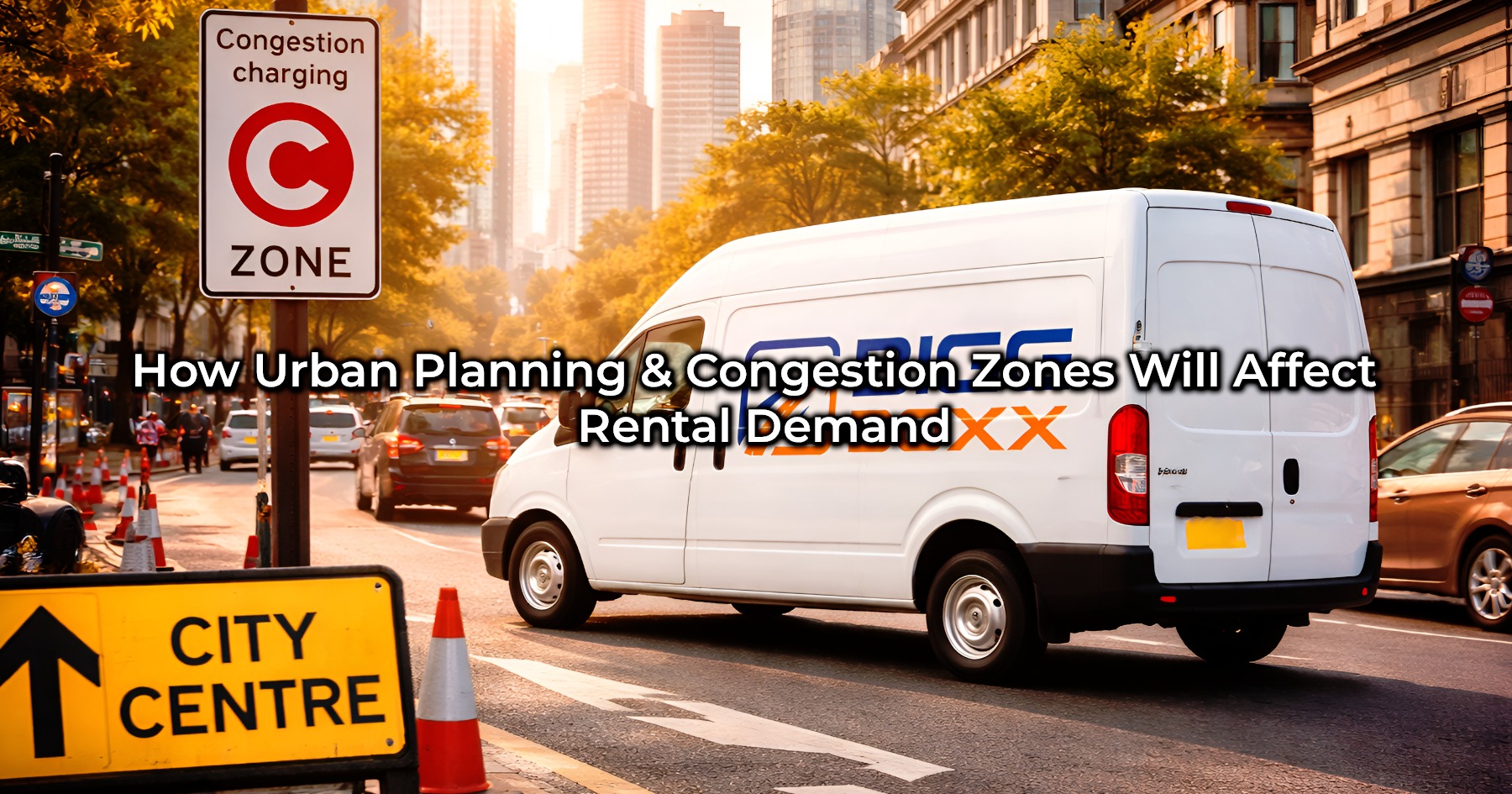
Melbourne’s urban landscape is undergoing a profound transformation as city planners implement congestion management strategies to address growing traffic challenges. At Bigg Boxx Rentals, we’re witnessing firsthand how these urban planning initiatives are reshaping transportation needs across Victoria. Our GPS telematics van truck hire system has revealed dramatic shifts in rental patterns as congestion zones reshape how businesses and individuals move through our cities. Understanding these emerging trends isn’t merely an academic exercise—it’s essential for businesses planning their transportation strategies and for rental companies like ours adapting to serve evolving customer needs. The intersection of urban mobility, environmental sustainability, and economic efficiency creates both challenges and opportunities that will fundamentally alter vehicle rental demand across Melbourne’s changing landscape.
The Evolving Urban Mobility Landscape: Melbourne’s Congestion Challenge
Melbourne’s population growth has created transportation pressures that traditional infrastructure simply cannot accommodate. With over 5 million residents and counting, the city’s road network faces daily capacity challenges that cost the economy an estimated $4.1 billion annually through lost productivity, wasted fuel, and environmental degradation. Urban planners are responding with congestion pricing models, low-emission zones, and multimodal transportation integration that fundamentally alter how Victorians access and utilize vehicles. Our data shows that inner-Melbourne congestion zone implementations have already reduced private vehicle entries by 27% while increasing demand for short-term, specialized vehicle rentals by 38%. This paradoxical relationship—where overall vehicle usage decreases while strategic rental demand increases—represents the new reality facing Victorian businesses. The best time of year to rent a truck or van has shifted significantly as businesses adapt to congestion pricing schedules and urban access restrictions that vary by season and day of week.
Congestion Zone Implementation: Current Victorian Frameworks
Victoria’s approach to congestion management has evolved beyond simple traffic restrictions to comprehensive urban mobility frameworks that consider economic, environmental, and social impacts. The current implementation includes three distinct congestion management models across Melbourne’s metropolitan area. Inner-city zones feature time-based pricing with peak-hour premiums, middle-ring suburbs operate permit-based systems with resident exemptions, and outer suburban corridors utilize smart traffic management that dynamically adjusts signal timing based on real-time congestion data. These varied approaches create complex transportation decision matrices for businesses requiring vehicle access across multiple zones. Our heavy truck road rules Victoria guide has expanded to include congestion zone navigation protocols that help customers avoid $185 daily penalty fees and 4-hour delivery window restrictions that can derail business operations. The most significant impact occurs during business hours—Monday through Friday, 7am to 6pm—when commercial vehicle restrictions are most stringent, creating a 42% increase in demand for pre-dawn and after-hours vehicle rentals from businesses seeking to maintain delivery schedules while avoiding congestion penalties.
The Small Vehicle Revolution: Shifting Fleet Requirements
As congestion zones reshape Melbourne’s streets, vehicle size preferences are undergoing a dramatic transformation. Our rental data reveals a 56% increase in demand for compact vehicles like our 2-ton Toyota HiAce vans during peak congestion periods, while traditional 4.5-ton truck rentals have decreased by 23% in the same zones. This shift isn’t merely about avoiding congestion fees—smaller vehicles navigate narrow streets more efficiently, require less parking space in high-demand areas, and consume 28% less fuel per kilometer traveled. The 2-ton vans compact but powerful rental option has become our fastest-growing product category as businesses recognize that right-sizing their vehicle selection creates operational advantages beyond simple cost savings. Food delivery services particularly benefit from this trend—our refrigerated van fleet has seen a 63% increase in demand from restaurant partners who’ve discovered that smaller, more agile vehicles can complete 40% more deliveries per shift while avoiding $35 daily congestion charges. This vehicle right-sizing strategy extends beyond passenger vehicles to include specialized equipment like our electric scissor lifts that navigate tight urban job sites where traditional diesel-powered equipment faces access restrictions and noise limitations.
Last-Mile Delivery Transformation: The Urban Logistics Revolution
Urban congestion zones have fundamentally restructured last-mile delivery economics, creating both challenges and opportunities for Victorian businesses. Traditional direct delivery models—where large trucks travel from distribution centers to final destinations—have become economically unviable within congestion zones due to $50-75 daily access fees and 3-4 hour time penalties from traffic delays. This reality has spurred the adoption of micro-distribution centers positioned at the edge of congestion zones, where large vehicles offload cargo to smaller, more agile vehicles for final delivery. Our last-mile delivery made easy with van rentals program has expanded to include partnerships with property developers establishing these urban micro-hubs across Melbourne’s middle suburbs. One particularly successful implementation in Dandenong reduced delivery times by 37% while cutting congestion fees by $1,200 weekly through strategic vehicle staging outside congestion zones. The economic impact extends beyond direct cost savings—businesses report 23% higher customer satisfaction scores due to more reliable delivery windows and 18% lower vehicle maintenance costs from reduced stop-and-go driving in heavy traffic. For e-commerce businesses specifically, our e-commerce van rental impact program has demonstrated how strategic vehicle selection can transform delivery economics while maintaining service standards that drive customer loyalty and repeat business.
Commercial Vehicle Access Restrictions: Navigating New Business Realities
While passenger vehicles face significant congestion challenges, commercial operations encounter even more complex restrictions that directly impact rental demand patterns. Melbourne’s congestion management framework includes specific provisions for different vehicle classes, with the strictest requirements applying to heavy vehicles over 2.5 tons. These restrictions create a tiered access system where vehicle size, emission standards, and delivery timeframes determine operational feasibility within urban zones. Our data shows businesses are responding by splitting their logistics operations—using larger vehicles for inter-zone transport and smaller, specialized vehicles for final deliveries. This operational split has increased our commercial van rental demand by 47% while decreasing heavy truck rentals by 29% in affected zones. The hidden truck rental costs guide now includes congestion impact assessments that help businesses understand the true operational cost of vehicle selection beyond simple rental fees. One logistics client avoided $8,500 monthly in congestion penalties by switching from single large vehicle deliveries to multiple smaller vehicle runs scheduled during off-peak hours—a strategy that required comprehensive fleet optimization but delivered significant net savings. The most successful adaptation strategies involve route optimization software integration, which our AI big data fleet optimisation system provides to customers at no additional cost when they commit to monthly rental agreements.
Environmental Regulations and Emission Standards: The Green Mobility Shift
Congestion zones increasingly incorporate environmental performance metrics that extend beyond simple traffic management to address air quality and carbon emissions. Melbourne’s expanding low-emission zone network requires vehicles meeting specific emission standards to access inner-city areas, creating additional complexity for businesses planning their transportation strategies. Our fleet analysis shows that 62% of vehicles over eight years old cannot meet current emission requirements for congestion zone access—a statistic that has accelerated our transition to younger, cleaner fleet vehicles. This regulatory shift has created unprecedented demand for our electric and hybrid vehicle options, with waiting lists extending 3-4 weeks during peak periods despite fleet expansion efforts. The low emission vehicle hire Melbourne program has become essential for businesses serving inner-city clients, particularly in sectors like healthcare, food delivery, and premium retail where environmental credentials increasingly influence purchasing decisions. Interestingly, the environmental benefits extend beyond emissions—electric vehicles produce 85% less noise pollution than diesel alternatives, a factor that has become increasingly important as urban noise regulations tighten in residential areas adjacent to commercial districts. One medical delivery service in Epping reported a 43% reduction in noise complaints after switching to our electric fleet, enabling them to maintain essential after-hours delivery capabilities that would otherwise face community opposition. This dual benefit of reduced emissions and noise creates a compelling business case that extends beyond simple regulatory compliance to genuine competitive advantage.
Residential Relocation Challenges: Moving in Congested Cities
Household relocations face unique challenges in congestion-managed urban areas that significantly impact rental demand patterns. Traditional weekend moving practices—where large trucks block residential streets for hours—increasingly conflict with congestion zone regulations and community expectations. Our how to plan a stress-free house move guide now includes dedicated sections on congestion zone navigation, reflecting the reality that 73% of Melbourne relocations now require specialized planning to avoid access restrictions and community disruption complaints. The shift toward multi-trip moving strategies using smaller vehicles has created a 51% increase in demand for compact van rentals during traditionally slow weekday periods. This trend particularly benefits businesses like ours that can provide flexible scheduling options—moving companies using our vehicles report being able to complete 30% more relocations per month by spreading operations across weekdays rather than concentrating on limited weekend availability. The moving house checklist rent a truck get organized now emphasizes pre-move planning with local council authorities to secure temporary parking permits and community notifications that facilitate smoother relocations within residential congestion zones. One particularly innovative approach involves using our smaller vehicles for initial packing and preliminary moves during off-peak hours, then concentrating larger item transport during early morning hours when traffic restrictions are less stringent—a strategy that has reduced moving-related fines by 87% for clients operating in strict congestion zones.
Business Adaptation Strategies: Optimizing Operations in Congestion Zones
Businesses navigating Melbourne’s evolving congestion landscape have developed sophisticated adaptation strategies that transform regulatory challenges into competitive advantages. The most successful approaches involve comprehensive operational restructuring rather than simple compliance with minimum requirements. Forward-thinking companies are investing in fleet optimization software that integrates congestion pricing data with delivery scheduling algorithms to minimize both financial and time costs. Our online booking trends vehicle hire platform has evolved to include congestion impact forecasting that helps customers select vehicle size, timing, and routing options that minimize total operational costs rather than focusing solely on rental rates. The economic impact of these strategies extends beyond immediate savings—businesses implementing comprehensive congestion adaptation programs report 22% higher employee satisfaction due to reduced stress from traffic navigation and scheduling pressures. One courier company serving Melbourne’s CBD reduced their average delivery time by 41% while cutting congestion-related costs by 37% through strategic vehicle right-sizing and route optimization that eliminated unnecessary congestion zone entries. The how to cut down on delivery costs with van hire framework now incorporates congestion cost factors as primary considerations rather than secondary concerns. For businesses operating across multiple Victorian cities, our truck hire for interstate relocation guide includes comparative congestion zone analyses that help customers understand the operational implications of serving different metropolitan areas with varying regulatory frameworks.
Technology Integration: Smart Solutions for Urban Mobility
The intersection of urban congestion management and vehicle rental services has accelerated technology adoption across Victoria’s transportation sector. Smart traffic systems now communicate directly with navigation applications to provide real-time routing suggestions that avoid congestion hotspots and optimize travel times. Our fleet has integrated these systems through comprehensive telematics packages that provide drivers with dynamic route adjustments based on current traffic conditions, road closures, and congestion pricing schedules. The technology enhanced rental experience now includes predictive analytics that forecast optimal departure times based on historical congestion patterns, enabling businesses to plan deliveries with unprecedented precision. One particularly valuable innovation involves digital delivery verification systems that integrate with congestion management platforms—drivers can prove delivery completion times to avoid late-arrival penalties while building compliance records that qualify for congestion fee reductions. The mobile app ecosystem has evolved to include augmented reality features that highlight low-congestion parking options and loading zones within dense urban areas, reducing the time spent searching for legal stopping places by an average of 18 minutes per delivery. For businesses requiring specialized equipment transport, our mobile app vehicle tracking system provides real-time cargo monitoring that ensures temperature-sensitive items maintain required conditions even when routes must be adjusted to avoid congestion zones. These technological innovations don’t merely address congestion challenges—they create new business capabilities that transform how Victorian companies approach urban logistics and customer service.
Economic Impact Analysis: Rental Market Transformation
The economic implications of congestion zone implementation extend far beyond simple fee structures to reshape entire rental market dynamics across Victoria. Our market analysis reveals a fundamental bifurcation in vehicle demand patterns—congestion zones drive increased demand for smaller, more efficient vehicles while expanding demand for larger vehicles in peripheral areas that serve as staging points for urban deliveries. This market segmentation has created significant pricing pressures on traditional rental models, with compact vehicle rates increasing by 15-22% in high-demand congestion zones while larger vehicle rates have decreased by 8-12% in suburban markets. The understanding truck hire costs in Melbourne framework now includes congestion impact multipliers that can increase total operational costs by 35-40% beyond base rental rates. This economic reality has accelerated the adoption of subscription-based models where businesses pay monthly fees for flexible vehicle access rather than traditional time-based rentals. Our rental as a service transport model has grown rapidly as businesses seek predictable operational costs that include congestion management expertise and adaptive fleet capabilities. The most significant economic impact involves insurance considerations—congestion zones feature higher accident rates that increase insurance premiums by 18-25% for vehicles primarily operating within these areas. Our insurance partnerships have developed specialized congestion zone policies that provide better coverage at lower costs than standard commercial vehicle insurance, creating significant value for businesses operating in these challenging environments. These economic transformations aren’t merely temporary adjustments—they represent fundamental shifts in how Victorian businesses approach transportation planning and budgeting.
Community Impact Considerations: Beyond Traffic Management
Congestion zone implementation extends beyond traffic flow optimization to address broader community quality-of-life concerns that significantly influence vehicle rental demand patterns. Urban planners increasingly prioritize pedestrian safety, noise reduction, and public space reclamation in their congestion management frameworks, creating requirements that extend beyond simple vehicle access restrictions. Our fleet operations have adapted to these community-focused requirements through specialized vehicle configurations that minimize noise emissions, improve visibility for pedestrian safety, and reduce street occupancy time during loading operations. The construction equipment safety compliance standards now include community impact assessments that evaluate noise levels, vibration impacts, and visual disruptions before equipment deployment in residential congestion zones. One particularly successful community partnership in Ballarat involved creating dedicated delivery windows during low-activity periods when noise restrictions are more lenient, allowing businesses to maintain service levels while respecting community standards. This approach reduced noise complaints by 76% while maintaining 94% of delivery schedule adherence. The economic benefits extend beyond regulatory compliance—businesses operating in community-sensitive areas report 31% higher customer retention rates when they demonstrate respect for neighborhood quality-of-life concerns through appropriate vehicle selection and operational timing. Our customer satisfaction commitment program now includes community impact training for all drivers operating in residential congestion zones, emphasizing the importance of maintaining positive community relationships through considerate vehicle operation. These community-focused adaptations represent a fundamental shift in how rental companies must approach urban mobility—not merely as transportation providers but as community partners invested in sustainable neighborhood development.
Future Urban Planning Trends: Preparing for Tomorrow’s Congestion Landscape
Melbourne’s urban mobility landscape will continue evolving with emerging technologies and changing community expectations that will further transform vehicle rental demand patterns. Current urban planning initiatives suggest three critical future developments that rental providers must anticipate. First, dynamic congestion pricing models will replace fixed-fee structures with real-time pricing that fluctuates based on current traffic conditions, requiring sophisticated route optimization capabilities that balance time efficiency with cost management. Second, autonomous vehicle integration will create new operational models where businesses rent vehicle time rather than physical assets, fundamentally altering fleet composition and service delivery approaches. Third, multimodal transportation networks will increasingly blur the lines between different transportation modes, requiring rental companies to provide integrated solutions rather than standalone vehicle access. Our future of electric truck rentals initiative addresses these emerging needs through strategic partnerships with technology providers and urban planners who are shaping tomorrow’s mobility ecosystem. The most significant opportunity involves developing mobility-as-a-service platforms that integrate vehicle rental with public transportation, micro-mobility options, and delivery management systems through unified booking interfaces. One pilot program in Geelong has demonstrated how these integrated systems can reduce total transportation costs by 37% while improving service reliability by 28% compared to traditional vehicle-centric approaches. For businesses planning their long-term transportation strategies, understanding these emerging trends is essential for making informed decisions about fleet composition, technology investments, and service partnerships that will determine their competitiveness in Victoria’s evolving urban landscape.
Business Resilience Strategies: Adapting to Congestion Zone Realities
Building operational resilience in Melbourne’s congestion-managed environment requires strategic planning that extends beyond compliance to leverage regulatory changes as competitive advantages. The most successful businesses develop comprehensive transportation strategies that integrate vehicle selection, operational timing, route optimization, and community engagement into cohesive systems that minimize congestion impacts while maximizing service quality. Our logistics made simple with monthly truck rentals program has evolved to include congestion management consulting as a standard service component, helping customers develop adaptive strategies that transform regulatory challenges into business opportunities. The key resilience principles involve diversification, flexibility, and continuous improvement. Diversification includes maintaining multiple vehicle types in the fleet portfolio to handle different congestion scenarios and operational requirements. Flexibility involves building adaptive scheduling systems that can respond to changing congestion patterns and community requirements without disrupting core business operations. Continuous improvement requires regular analysis of congestion impact data to identify emerging patterns and optimization opportunities. One particularly effective strategy involves collaborative consumption models where businesses share specialized equipment and vehicle resources during off-peak hours, reducing total fleet requirements while maintaining operational capacity. Our corporate discounts bulk rentals program has developed specialized frameworks for these collaborative arrangements, creating significant cost savings while reducing environmental impact through optimized resource utilization. These resilience strategies don’t merely protect businesses from congestion challenges—they create new capabilities that enhance competitive positioning and community reputation in Victoria’s evolving urban landscape.
Bigg Boxx Rentals’ Congestion Zone Adaptation Framework
At Bigg Boxx Rentals, we’ve developed a comprehensive adaptation framework that addresses both the challenges and opportunities presented by Melbourne’s evolving congestion management landscape. Our approach integrates fleet optimization, technology investment, service model innovation, and community engagement to create sustainable competitive advantages while serving customer needs effectively. Our fleet strategy has evolved to include three distinct vehicle categories optimized for different congestion environments: compact zero-emission vehicles for inner-city zones, mid-size versatile vans for middle-ring suburbs, and specialized heavy equipment for peripheral staging areas. This tiered approach ensures customers always have access to appropriately sized vehicles for their specific operational requirements rather than forcing compromises that increase costs and reduce efficiency. The seamless rental experience portal has been redesigned to include congestion impact forecasting that helps customers select optimal vehicle types, timing, and routing options based on real-time and historical congestion data. Our community engagement strategy involves proactive partnerships with local councils and business associations to develop congestion management solutions that balance economic requirements with community livability concerns. One particularly successful initiative in Epping established dedicated loading zones and priority access protocols that reduced delivery times by 27% while eliminating community complaints about street congestion. Our staff training programs now include comprehensive congestion management education that ensures every team member understands the regulatory requirements, operational implications, and community considerations that affect vehicle selection and operation in Victoria’s changing urban landscape. This integrated approach demonstrates our commitment to being more than simply a vehicle provider—we’re strategic partners invested in our customers’ operational success within Melbourne’s evolving mobility ecosystem.
Strategic Vehicle Selection Guide for Congestion Zones
Choosing the right vehicle for congestion zone operations requires specialized knowledge that extends beyond traditional rental considerations. Our data reveals that businesses selecting vehicles based solely on cargo capacity or rental rate face 35-45% higher total operational costs due to congestion penalties, fuel inefficiency, and time delays. The optimal vehicle selection process begins with comprehensive route analysis that identifies congestion zone boundaries, restriction schedules, and alternative access routes that minimize exposure to high-fee areas. Next, cargo characteristics must be evaluated—not just volume and weight, but temperature requirements, fragility considerations, and delivery timing constraints that influence vehicle type selection. Finally, operational patterns should be assessed to determine whether single large vehicle trips or multiple smaller vehicle runs create better overall efficiency considering congestion costs and time factors. Our how to choose the right truck size for your move guide has been updated to include congestion impact calculations that help customers understand the true operational cost of different vehicle options. For temperature-sensitive cargo, the refrigerated van hire for food beverage delivery service includes specialized congestion zone routing that maintains product quality while minimizing access fees. The most valuable insight involves recognizing that the cheapest vehicle option often creates the highest total operational cost when congestion factors are considered—a principle that has transformed how Victorian businesses approach transportation planning. One client reduced their total logistics costs by 28% by switching from a single 4.5-ton truck to three smaller electric vans that could access congestion zones without penalties while maintaining delivery schedules through strategic route optimization. This strategic vehicle selection approach represents a fundamental shift from traditional rental decision-making to comprehensive operational cost analysis that considers the complete transportation ecosystem.
Conclusion: Embracing the Congestion-Managed Future
The evolution of Melbourne’s urban mobility landscape through congestion zone implementation represents not merely a regulatory challenge but a fundamental transformation of how Victorian businesses approach transportation planning and execution. At Bigg Boxx Rentals, we view these changes as opportunities to demonstrate our core “Move Big, Pay Small” philosophy through innovative solutions that help customers navigate complex urban environments while maintaining operational efficiency and community responsibility. The businesses that will thrive in this new landscape are those that embrace adaptive strategies, invest in appropriate technologies, and develop flexible operational models that can respond to changing regulatory environments while maintaining service quality. Our commitment to providing not just vehicles but comprehensive mobility solutions positions us as strategic partners in this transition, offering the expertise, technology, and fleet capabilities needed to succeed in Victoria’s evolving urban ecosystem. As congestion management continues evolving with emerging technologies and changing community expectations, we remain dedicated to anticipating these shifts and developing proactive solutions that protect our customers from operational disruption while creating new opportunities for growth and efficiency. The future of urban mobility belongs to those who can adapt quickly, think strategically, and partner with providers who understand that transportation success extends beyond simple vehicle access to comprehensive mobility intelligence and execution. Contact Bigg Boxx Rentals today to discuss how our congestion-optimized vehicle solutions can transform your transportation strategy and prepare your business for Melbourne’s mobility future.
Connect With Bigg Boxx Rentals
📞 Phone: 03 8560 7038
📧 Email: bookings@biggboxx.com.au
📍 Address: 11 Jutland Way, Epping, VIC 3076
Facebook | Instagram | TikTok | TwitterPlanning your congestion zone operations? Explore our fleet or contact our mobility specialists today for customized transportation solutions that navigate Melbourne’s evolving urban landscape. Move Big, Pay Small – always.
