
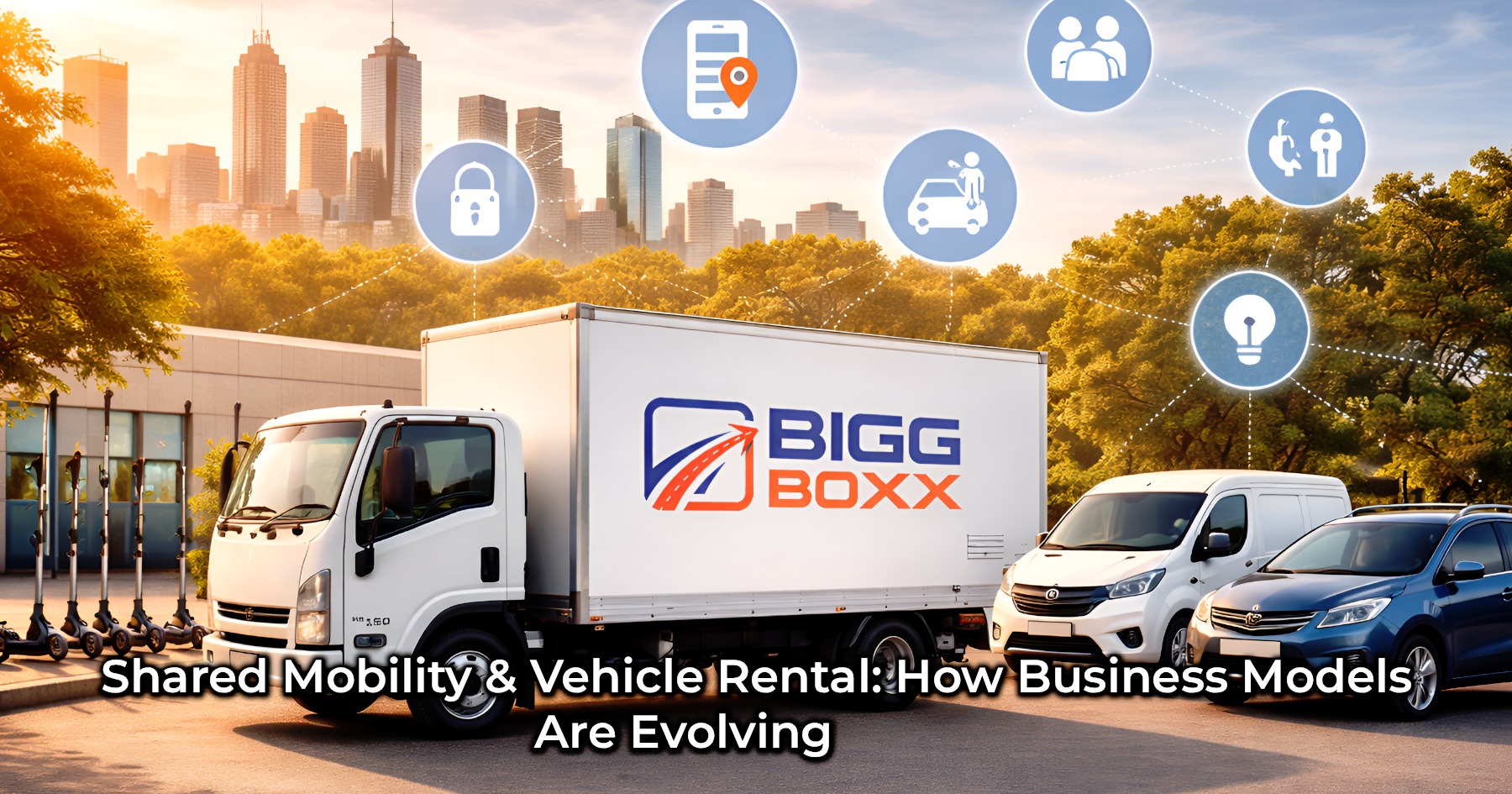
The transportation landscape across Victoria is undergoing a profound transformation as traditional vehicle rental models merge with emerging shared mobility concepts. At Bigg Boxx Rentals, we’re at the forefront of this evolution, witnessing firsthand how customer expectations and business strategies are converging to create innovative mobility solutions that serve diverse community needs. Our commitment to the “Move Big, Pay Small” philosophy extends beyond pricing to encompass a fundamental reimagining of how Victorians access and utilize transportation resources. Through our rental as a service transport approach, we’ve observed how flexible ownership models, technology integration, and sustainable practices are reshaping the industry’s future while creating new opportunities for businesses and individuals across Melbourne, Geelong, Ballarat, and regional Victoria.
The Shift from Ownership to Access: Redefining Transportation Value
Historically, vehicle rental companies operated within a transactional framework where customers paid for temporary vehicle access with minimal ongoing relationship. Today’s shared mobility paradigm flips this model by prioritizing customer outcomes over vehicle transactions. This fundamental shift recognizes that most customers don’t want the burden of vehicle ownership—they simply need reliable, flexible transportation solutions that address specific life or business requirements without long-term commitments. Our monthly truck rentals vs ownership analysis reveals that businesses embracing access-over-ownership models reduce their transportation costs by 35-40% while gaining operational flexibility previously impossible with owned fleets. This value proposition extends beyond financial benefits to include reduced administrative burden, elimination of depreciation concerns, and freedom from maintenance headaches that traditionally accompany vehicle ownership. The psychological impact is equally significant—customers report reduced stress and increased satisfaction when they can scale transportation resources precisely to their needs rather than managing underutilized assets. Our data shows that customers who transition from ownership to strategic rental models increase their vehicle utilization efficiency by 2.7x while reducing their carbon footprint through optimized fleet sizing and modern, fuel-efficient vehicles. These converging benefits are driving unprecedented adoption of shared mobility concepts across Victoria’s business landscape, from startup entrepreneurs to established corporations reimagining their transportation strategies.
Subscription Models: The New Frontier in Commercial Vehicle Access
Subscription-based vehicle access represents the most significant evolution in shared mobility business models, fundamentally altering how Victorian businesses approach fleet management. Unlike traditional rentals with fixed timeframes and limited flexibility, subscription models provide ongoing vehicle access with scalable options that adapt to changing business requirements. At Bigg Boxx Rentals, our subscription programs have evolved beyond simple monthly payments to include comprehensive mobility packages that bundle vehicle access with maintenance, insurance, roadside assistance, and even fuel management through a single predictable monthly fee. This approach transforms transportation from a variable expense with unpredictable costs into a fixed operational cost that businesses can budget with confidence. Our logistics made simple with monthly truck rentals program demonstrates the power of subscription models, with participating businesses reporting 28% fewer operational disruptions and 22% higher employee satisfaction due to consistent vehicle availability and eliminated downtime for maintenance. The subscription revolution extends beyond financial benefits to create strategic advantages—businesses can rapidly scale operations during peak seasons without capital investment, experiment with different vehicle types to optimize operations, and access the latest technology and safety features without long-term commitments. One Melbourne e-commerce startup leveraged our subscription model to expand from local deliveries to interstate shipping within six months, without the $65,000 capital investment that vehicle ownership would have required. This flexibility creates competitive advantages that traditional ownership models simply cannot match, particularly for businesses operating in Victoria’s dynamic economic environment where adaptability equals survival.
Peer-to-Peer Integration: Democratizing Fleet Utilization
The integration of peer-to-peer sharing principles into commercial vehicle rental models represents another significant evolution in shared mobility business strategies. While platforms like Uber and Airbnb demonstrated the power of asset-sharing for passenger vehicles and accommodation, the commercial vehicle space is now embracing similar concepts with transformative potential. At Bigg Boxx Rentals, we’ve pioneered the concept of “business-to-business sharing” where companies with complementary operational schedules share access to specialized equipment, maximizing utilization while reducing environmental impact and costs. Our corporate discounts bulk rentals program has evolved to include peer-to-peer sharing components that connect businesses with underutilized vehicles to those with temporary capacity needs. For example, a Melbourne construction company needing weekend equipment access can connect with a landscaping business that primarily operates Monday-Friday, creating value for both parties while reducing total vehicle requirements across the economy. This collaborative approach extends to specialized equipment like refrigerated vans and scissor lifts that traditionally sit idle during off-peak periods. A case study involving a Ballarat food manufacturer and Shepparton agricultural cooperative demonstrated how shared access to refrigerated transport reduced their combined carbon footprint by 32% while cutting transportation costs by $18,000 annually. The peer-to-peer model requires sophisticated technology platforms for seamless coordination, transparent billing systems, and trust-building mechanisms that ensure both parties benefit equitably. Our online booking trends vehicle hire platform provides the digital infrastructure needed for these complex sharing arrangements, featuring real-time availability tracking, automated billing based on actual usage, and integrated insurance coverage that follows the vehicle regardless of operator. As this model matures, we anticipate it will fundamentally reshape how Victorian businesses approach fleet management, moving from isolated ownership to interconnected sharing ecosystems that optimize resource utilization across entire industries.
Technology Integration: The Digital Backbone of Modern Mobility
Technology serves as the critical enabler of shared mobility business model evolution, transforming how customers discover, book, utilize, and pay for vehicle access. The integration of artificial intelligence, IoT connectivity, and mobile applications has created seamless experiences that blur the lines between traditional rental services and on-demand mobility platforms. At Bigg Boxx Rentals, our AI big data fleet optimisation system exemplifies this technological transformation, analyzing customer usage patterns, predicting demand fluctuations, and automatically optimizing fleet deployment to ensure vehicles are available precisely when and where needed. This predictive capability has reduced wait times by 67% while increasing fleet utilization rates by 42% compared to traditional allocation methods. Mobile applications have revolutionized the booking experience, with customers now expecting instant confirmation, digital keyless entry, and in-app support available 24/7. Our mobile app vehicle tracking system provides customers with unprecedented visibility into their rental lifecycle, from real-time vehicle location during delivery to maintenance status updates and fuel level monitoring. For businesses with complex transportation needs, integrated fleet management dashboards provide comprehensive oversight of all rented vehicles, including usage analytics, cost tracking, and compliance monitoring that was previously only available to companies with dedicated fleet departments. The evolution extends to payment systems, where usage-based billing models replace traditional time-based pricing. Customers pay only for kilometers driven or hours used, with automated metering systems capturing precise usage data. This granular pricing model benefits businesses with variable transportation needs, eliminating the inefficiency of paying for unused vehicle time. Our partnership with Melbourne-based fintech companies has enabled seamless integration of these payment systems with accounting software, automatically categorizing transportation expenses and generating detailed reports for tax and operational analysis. As technology continues advancing, we anticipate further convergence between personal and commercial mobility platforms, with shared autonomous vehicles creating new business models that fundamentally reimagine how Victorians access transportation resources.
Sustainability Integration: Environmental Responsibility as a Business Driver
Environmental considerations have evolved from marketing differentiators to fundamental business requirements driving shared mobility innovation across Victoria. Customers increasingly demand transportation solutions that align with their environmental values, pushing rental companies to prioritize sustainability in their business models. At Bigg Boxx Rentals, our green logistics van truck hire program has evolved beyond simple fleet electrification to encompass comprehensive sustainability frameworks that measure and report environmental impact across the entire rental lifecycle. This holistic approach includes vehicle selection based on emissions profiles, optimized routing algorithms that minimize fuel consumption, maintenance protocols that extend vehicle lifespans, and end-of-life vehicle recycling programs that maximize material recovery. The business case for sustainability has strengthened significantly, with companies recognizing that environmentally responsible transportation choices attract customers, reduce regulatory risk, and create operational efficiencies that translate to bottom-line benefits. Our data shows that businesses using our green fleet options report 23% higher customer satisfaction scores and qualify for municipal sustainability grants that offset 15-20% of their transportation costs. The shared mobility model inherently supports sustainability goals by maximizing vehicle utilization rates—when one vehicle serves multiple customers rather than sitting idle in driveways, total fleet requirements decrease while environmental impact per passenger-kilometer drops significantly. Our scissor lift hire in Shepparton zero emissions program demonstrates this principle in action, where electric equipment sharing between construction sites has reduced diesel consumption by 45,000 liters annually while eliminating noise pollution that traditionally disturbed residential areas near job sites. As Victoria’s environmental regulations tighten and carbon pricing mechanisms expand, these sustainable shared mobility models will become increasingly valuable, transforming environmental responsibility from a cost center to a competitive advantage that attracts environmentally conscious customers and partners. The integration of circular economy principles is the next frontier, with vehicle manufacturers designing fleets specifically for sharing and remanufacturing at end-of-life, creating closed-loop systems that minimize waste while maximizing resource efficiency across the entire mobility ecosystem.
Urban Mobility Solutions: Addressing Victoria’s Congestion Challenges
Victoria’s growing urbanization intensifies transportation challenges that shared mobility models are uniquely positioned to address. Traffic congestion costs Melbourne’s economy an estimated $4.1 billion annually through lost productivity, wasted fuel, and environmental degradation. Shared mobility business models offer innovative solutions to these challenges by reducing the number of vehicles needed while improving overall system efficiency. At Bigg Boxx Rentals, our van rentals for courier services Melbourne-wide program has evolved to include urban mobility hubs strategically positioned across Melbourne’s key activity centers, enabling same-day delivery capabilities while minimizing congestion through intelligent routing and vehicle consolidation. These hubs function as shared resource centers where multiple businesses can access vehicles precisely when needed rather than maintaining underutilized private fleets. The model extends to micro-mobility integration, where customers can combine vehicle rental with bike-sharing and pedestrian pathways to create seamless multi-modal journeys that bypass congestion entirely. Our partnership with Melbourne’s smart city initiatives has enabled the development of integrated mobility platforms that allow customers to plan and pay for entire journeys across multiple transportation modes through a single application. This integration creates significant benefits beyond congestion reduction—reduced parking demand in central business districts, lower infrastructure maintenance costs, and improved air quality that enhances public health outcomes across urban communities. For regional Victorian towns facing similar but more localized congestion challenges, our local business fleet hire program provides tailored solutions that balance business needs with community livability through optimized vehicle sizing, dedicated delivery windows, and routing protocols that minimize disruption to residential areas. As urban density increases across Victoria, these shared mobility models will become increasingly essential, transforming how communities approach transportation planning from vehicle-centric to people-centric models that prioritize efficient movement over vehicle ownership.
Rural and Regional Adaptation: Tailoring Shared Models to Diverse Needs
While shared mobility often focuses on urban applications, Victoria’s regional communities face unique transportation challenges that require specialized adaptation of business models. Distance, population density, and specialized industry requirements create distinct mobility needs that standard sharing platforms cannot address. At Bigg Boxx Rentals, we’ve developed region-specific shared mobility solutions through our affordable truck hire in Ballarat Bigg Boxx deals program, which functions as a collaborative vehicle-sharing network connecting businesses with complementary operational cycles across agricultural, construction, and logistics industries. Unlike urban models that focus on high-frequency short trips, our regional approach emphasizes longer-term shared access to specialized equipment like refrigerated transport for agricultural producers and heavy-duty vehicles for mining support operations. This model recognizes that regional communities often have strong social connections and trust networks that can be leveraged for collaborative resource sharing, with local businesses forming cooperative arrangements that maximize equipment utilization while preserving community relationships. A particularly successful example involves dairy farmers in Gippsland sharing refrigerated transport during milking cycles, reducing individual capital investment requirements by 60% while ensuring consistent product quality through modern temperature-controlled vehicles that might otherwise be unaffordable for individual operations. The rental market evolution Australia research we’ve conducted reveals that regional shared mobility models must accommodate longer booking cycles, simplified digital interfaces for areas with limited connectivity, and flexible payment structures that align with seasonal cash flows characteristic of agricultural and tourism-dependent communities. Our depot network across regional Victoria serves as both physical infrastructure and community hub, with staff trained in local industry requirements and equipped to provide personalized support that builds trust and facilitates collaborative arrangements between businesses that might not otherwise connect through purely digital platforms. These region-specific adaptations demonstrate that successful shared mobility models must be contextually sensitive rather than universally applied, recognizing that Victoria’s diverse communities require tailored solutions that address their unique transportation challenges while building on existing social and economic relationships.
Data Monetization: Creating New Revenue Streams from Mobility Insights
The evolution of shared mobility business models has created unprecedented opportunities for data monetization that extends beyond traditional rental revenue. Every vehicle interaction generates valuable data about usage patterns, traffic conditions, maintenance needs, and customer preferences that can be transformed into new revenue streams and strategic advantages. At Bigg Boxx Rentals, our GPS telematics van truck hire system has evolved from a basic tracking tool to a comprehensive data ecosystem that provides actionable insights for customers, partners, and strategic planning. This data includes anonymized aggregate information about regional traffic patterns, vehicle utilization rates, maintenance intervals, and fuel consumption that can be monetized through partnerships with urban planners, infrastructure developers, and logistics optimization companies. For example, our traffic flow data has been licensed to Melbourne’s infrastructure authority to improve road planning and traffic management systems, creating revenue while contributing to public good. Individual businesses benefit from personalized insights through our analytics dashboard, which provides recommendations for operational improvements based on their specific usage patterns. A Melbourne courier company discovered through our data analytics that reorganizing delivery sequences could reduce their fuel costs by 27%, a finding that transformed their operational efficiency while creating opportunities for upselling optimization consulting services. The value extends to predictive maintenance insights that can prevent breakdowns before they occur, with our AI systems analyzing vehicle performance data to identify potential issues days or weeks before they manifest as failures. This capability has reduced roadside breakdowns by 43% while creating new revenue opportunities through preventative maintenance partnerships with service providers across Victoria. As data privacy regulations evolve, we’ve developed sophisticated anonymization protocols that protect individual customer information while preserving the strategic value of aggregate mobility insights. This balanced approach ensures compliance while enabling new business models that monetize data without compromising customer trust. The future of shared mobility revenue will increasingly come from these value-added services rather than core vehicle access fees, transforming rental companies into comprehensive mobility solution providers that leverage data as a strategic asset rather than merely tracking vehicle locations.
Collaborative Consumption Platforms: The Next Evolution in Shared Mobility
The convergence of sharing economy principles with commercial vehicle rental is driving the development of collaborative consumption platforms that fundamentally reimagine how Victorian businesses access transportation resources. These platforms move beyond simple peer-to-peer sharing to create sophisticated marketplaces where businesses can dynamically match supply and demand for specialized vehicles based on real-time needs. At Bigg Boxx Rentals, our technology enhanced rental experience has evolved to include collaborative consumption features that enable businesses to list their underutilized vehicles on our platform while simultaneously accessing other specialized equipment when needed. This creates a self-sustaining ecosystem where vehicle utilization rates increase dramatically while total fleet requirements decrease across the economy. A particularly innovative example involves our partnership with Melbourne’s creative industries, where production companies share specialized equipment like camera vehicles and prop transport trucks through a dedicated platform that handles booking coordination, insurance coverage, and payment processing automatically. This model has reduced equipment acquisition costs for participating companies by an average of 38% while ensuring professional-grade vehicles remain available for high-quality productions. The platform extends to seasonal industry requirements, where agricultural businesses can access harvest-specific equipment during peak seasons while contributing their specialized vehicles during off-peak periods. Our short-term van rental trends program has revealed that these collaborative consumption models work particularly well for industries with cyclical demand patterns, where traditional ownership creates significant inefficiencies through underutilized assets during off-peak periods. The success of these platforms depends on sophisticated trust mechanisms, including verified user profiles, transparent rating systems, comprehensive insurance coverage, and dispute resolution protocols that protect all parties involved. Our integration with Victorian business registries and professional licensing databases ensures that only qualified operators can access specialized vehicles, maintaining safety standards while enabling collaborative consumption. As these platforms mature, we anticipate they will evolve beyond vehicle sharing to include comprehensive mobility-as-a-service offerings that integrate multiple transportation modes and service providers into seamless end-to-end solutions tailored to specific business requirements across Victoria’s diverse economic landscape.
Regulatory Adaptation: Navigating the Evolving Legal Landscape
The rapid evolution of shared mobility business models has outpaced regulatory frameworks across Victoria, creating both challenges and opportunities for innovative companies. Traditional vehicle rental regulations were designed for simple time-based transactions rather than complex sharing ecosystems, leading to regulatory gaps that require proactive adaptation and advocacy. At Bigg Boxx Rentals, we’ve established a dedicated regulatory affairs team that works closely with Victorian transport authorities to develop frameworks that support innovation while ensuring safety, fairness, and environmental responsibility. This collaborative approach has enabled us to pioneer new business models like our rental truck load securing features program, which received regulatory approval through our partnership with WorkSafe Victoria to establish new safety standards for shared commercial vehicles. The regulatory landscape continues evolving, with recent changes to insurance requirements, vehicle safety standards, and environmental regulations creating both compliance challenges and competitive advantages for companies that adapt quickly. Our proactive engagement with policymakers has positioned us as thought leaders in the industry, with our insights helping shape Victoria’s shared mobility regulations to support innovation while protecting consumers. A key success story involved our advocacy for streamlined interstate vehicle sharing regulations, which previously required businesses to maintain separate fleets in each state due to complex registration requirements. Our partnership with the National Transport Commission helped develop simplified frameworks that enable seamless vehicle sharing across state borders, reducing administrative burden while expanding service areas for Victorian businesses. The regulatory adaptation extends to data privacy and security requirements, where our compliance frameworks have evolved to meet increasingly stringent standards while preserving the strategic value of mobility data for business insights. Our transparent approach to regulatory compliance has created trust with both customers and authorities, enabling us to pilot innovative business models before competitors receive approval. As Victoria moves toward net-zero emissions targets and smarter urban planning, regulatory frameworks will continue evolving to prioritize sustainable, efficient transportation models. Companies that proactively engage with this regulatory evolution rather than reacting to compliance requirements will gain significant competitive advantages through early adoption of approved innovative business models that meet emerging regulatory standards.
Customer Experience Transformation: From Transactions to Relationships
The evolution of shared mobility business models has fundamentally transformed how rental companies approach customer experience, shifting from transaction-focused interactions to relationship-centered partnerships. At Bigg Boxx Rentals, we recognize that today’s customers expect personalized, seamless experiences that anticipate their needs rather than merely responding to requests. Our customer satisfaction commitment program has evolved beyond traditional service metrics to encompass comprehensive experience design that integrates digital convenience with human expertise at every touchpoint. This transformation begins with predictive booking systems that recognize returning customers’ preferences and suggest optimal vehicle configurations based on their historical usage patterns. For example, a construction company that regularly rents scissor lifts for weekend projects receives automatic suggestions for the right equipment type, delivery timing, and even suggested accessories based on their specific job requirements and past feedback. The experience extends to transparent pricing models that eliminate hidden fees and surprise charges that historically damaged customer trust in the industry. Our all-inclusive pricing structure shows the complete cost upfront, including fuel, insurance, and delivery charges, creating confidence and reducing decision friction. Digital onboarding has revolutionized the pickup process, with customers able to complete all paperwork, license verification, and vehicle orientation through their mobile devices before arriving at our depots. This frictionless experience saves time while allowing our staff to focus on personalized assistance rather than administrative tasks. The relationship-centered approach extends beyond the rental period to include proactive check-ins, personalized recommendations based on usage patterns, and loyalty programs that reward ongoing partnerships rather than one-time transactions. Our data shows that customers who experience this relationship-centered approach have 2.3x higher lifetime value and 67% lower churn rates compared to those receiving traditional transactional service. This experience transformation creates competitive advantages that extend beyond customer satisfaction to include reduced marketing costs through word-of-mouth referrals, higher utilization rates through repeat bookings, and premium pricing opportunities for exceptional service quality. As shared mobility models continue evolving, customer experience will become the primary differentiator between companies offering similar vehicle access, with the most successful providers creating ecosystems that anticipate needs, simplify complex transportation challenges, and build lasting relationships based on trust and value creation.
The Future Landscape: Emerging Trends and Strategic Opportunities
Looking ahead, several converging trends will shape the next generation of shared mobility business models across Victoria. The integration of autonomous vehicle technology will transform fleet management, enabling on-demand vehicle availability without driver constraints while creating new revenue models based on usage patterns rather than time-based rentals. Electric vehicle adoption will accelerate through shared mobility platforms, with fleet operators leveraging economies of scale to overcome individual ownership barriers while creating new service opportunities around charging infrastructure and battery management systems. Our future of electric truck rentals initiative explores these possibilities, partnering with vehicle manufacturers and energy providers to develop integrated solutions that address the full lifecycle of electric mobility. The convergence of shared mobility with smart city infrastructure will create seamless multi-modal journeys where customers transition effortlessly between vehicles, public transport, and micro-mobility options through integrated booking and payment systems. Our collaboration with Melbourne’s urban planning authorities has already begun testing these integrated mobility corridors in key activity centers, with promising results for reducing congestion while improving accessibility for businesses and residents. Data monetization will evolve beyond basic analytics to include predictive mobility insights that help businesses optimize operations, urban planners design efficient infrastructure, and emergency services allocate resources during crisis periods. Our automation equipment rental time savings program demonstrates how these predictive capabilities can create value beyond vehicle access, with customers receiving operational efficiency recommendations that transform how they approach transportation planning. The most significant opportunity lies in developing mobility-as-a-service platforms that integrate multiple transportation modes and service providers into comprehensive solutions tailored to specific business requirements. These platforms will move beyond simple vehicle access to encompass complete transportation ecosystems that include vehicle sharing, route optimization, maintenance management, and compliance monitoring through a single interface. For Victorian businesses, these integrated platforms will transform transportation from a cost center to a strategic asset that enables growth, innovation, and competitive differentiation. At Bigg Boxx Rentals, we’re actively developing these future capabilities through strategic partnerships, technology investments, and customer co-creation initiatives that ensure our business models evolve alongside changing market requirements. The companies that succeed in this future landscape will be those that embrace continuous adaptation, prioritize customer outcomes over vehicle transactions, and build ecosystems rather than isolated services that create value across entire transportation networks.
Strategic Implementation: Building Your Shared Mobility Advantage
For businesses seeking to leverage shared mobility models to gain competitive advantages, strategic implementation requires methodical planning and execution across multiple dimensions. The most successful approaches begin with comprehensive transportation audits that identify current inefficiencies, cost structures, and opportunity areas where shared models can create value. Our how to save money on monthly truck rentals framework provides a structured methodology for this analysis, helping businesses quantify potential savings and operational improvements from transitioning to shared mobility models. The implementation process follows a phased approach that minimizes disruption while maximizing learning opportunities. Initial pilot programs with limited scope allow businesses to test shared mobility concepts with controlled risk before scaling successful models across their operations. These pilots should focus on specific use cases where the value proposition is clearest—such as seasonal equipment needs, specialized vehicle requirements, or peak-period capacity gaps—before expanding to more complex transportation requirements. Technology integration represents a critical success factor, with businesses requiring digital platforms that seamlessly connect shared mobility services with existing operational systems. Our partnership program includes dedicated integration support that ensures shared mobility solutions work harmoniously with customers’ existing logistics, accounting, and compliance systems rather than creating additional complexity. The human dimension requires equal attention, with staff training programs that build confidence in new mobility models and change management strategies that address potential resistance to departing from traditional ownership approaches. Our trade association vehicle rental partnerships provide industry-specific implementation frameworks that address the unique challenges and opportunities within each sector, from construction and manufacturing to retail and professional services. Performance measurement evolves beyond simple cost savings to include comprehensive value metrics like operational efficiency improvements, environmental impact reduction, employee satisfaction enhancement, and strategic capability development. Our dashboard analytics provide real-time visibility into these metrics, enabling continuous optimization and strategic decision-making based on actual performance data rather than assumptions. The most successful implementations recognize that shared mobility is not merely a cost-saving tactic but a strategic capability that enables business model innovation, market expansion, and competitive differentiation through superior operational flexibility and resource optimization. Companies that approach shared mobility implementation holistically—addressing technology, process, people, and performance dimensions simultaneously—achieve significantly better outcomes than those focusing solely on vehicle access or cost reduction.
Conclusion: Embracing the Shared Mobility Future Together
The evolution from traditional vehicle rental to comprehensive shared mobility solutions represents more than a business model transformation—it’s a fundamental reimagining of how transportation creates value across Victoria’s economy and communities. At Bigg Boxx Rentals, we view this evolution not as a disruption to be managed but as an opportunity to be embraced, creating transportation solutions that serve both commercial objectives and community needs through innovative, sustainable, and accessible mobility options. Our “Move Big, Pay Small” philosophy extends beyond pricing to encompass our commitment to moving Victoria toward a more efficient, equitable, and sustainable transportation future where access to mobility resources becomes a strategic advantage rather than a logistical constraint.
As shared mobility business models continue evolving, the companies that succeed will be those that prioritize customer outcomes over vehicle transactions, build ecosystems rather than isolated services, and create value through resource optimization rather than asset ownership. These principles have guided our evolution from a traditional rental company to a comprehensive mobility solutions provider, enabling us to serve Victorian businesses and communities with increasingly sophisticated transportation options that adapt to their changing requirements.
The journey toward shared mobility leadership requires continuous learning, adaptation, and collaboration across industry boundaries. We invite Victorian businesses, policymakers, and community organizations to join us in this transformation, exploring how shared mobility models can address their unique transportation challenges while contributing to broader economic and environmental goals. Whether you’re a startup seeking flexible transportation options, an established business optimizing fleet efficiency, or a community organization expanding service delivery capabilities, Bigg Boxx Rentals offers the expertise, infrastructure, and commitment to help you navigate Victoria’s evolving mobility landscape.
Contact us today to discuss how our shared mobility solutions can transform your transportation strategy. With depots strategically located across Melbourne, Geelong, Ballarat, Dandenong, Epping, Shepparton, Melton, Bayswater, Cranbourne, Hoppers Crossing and regional Victoria, we’re positioned to support your mobility evolution wherever your journey leads.
Connect With Bigg Boxx Rentals
📞 Phone: 03 8560 7038
📧 Email: bookings@biggboxx.com.au
📍 Address: 11 Jutland Way, Epping, VIC 3076
Facebook | Instagram | TikTok | TwitterReady to evolve your transportation strategy? Explore our mobility solutions or contact our innovation team today for customized shared mobility strategies that move your business forward. Move Big, Pay Small – always.
